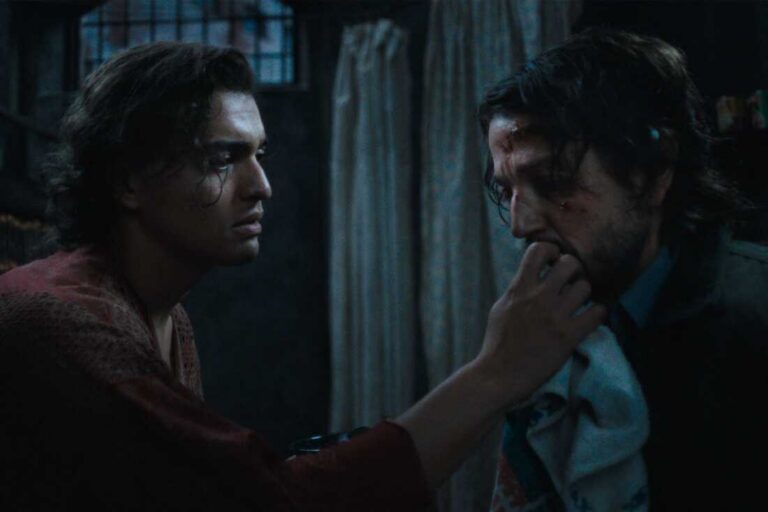
The mechanic identifies the familiar squeaking noise which he has encountered multiple times. Prosthetic leg, specific gait, voice on the phone. That's all it takes. Years of blindfolded detention come flooding back through the side entrance of an ordinary night shift, and suddenly Vahid is doing the maths on revenge.
Jafar Panahi's Palme d'Or winner opens with what looks like a transaction gone wrong. A man strikes a dog while causing damage to his vehicle which requires subsequent repairs. Simple exchange of services. The currency changes when Vahid identifies something in his customer which leads to a completely new story about financial obligations in It Was Just an Accident.
The first thing I noticed was the environment. The garage serves as the location instead of the desert where Vahid leads his suspected torturer. The fluorescent lights and the inventory of parts and Vahid's controlled movements through his owned but uncontrolled environment. The workshop operates as a dangerous economic system which allows workers to run their own business yet they remain under the control of anyone who enters the facility during late-night hours. The film never underlines this. It just lets you notice.
Vahid bundles his unconscious captive into a van and drives. Digs a pit. Starts to bury him. Then stops. "I was blindfolded the entire time," he says later, or something close to it. Can he be certain?The man continues to claim he has no importance because he works for the government and suffers from a disabled leg. The economic aspects of this situation become more complex at this point.
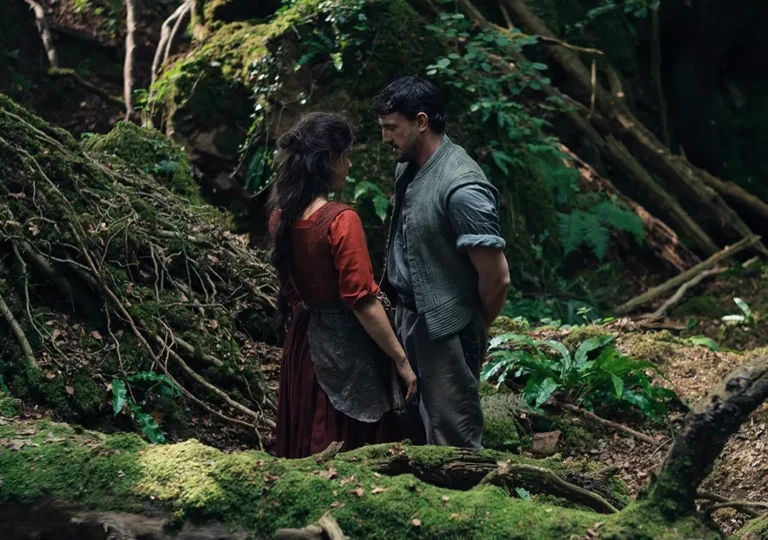
Panahi assembles a small coalition of former detainees, each asked to identify whether this body in the back of the van is indeed Eghbal, their shared tormentor. Shiva the photographer recognises his smell. Hamid from the pharmacy wants him dead regardless. Golrokh interrupted her wedding photography session to enter the van while keeping her wedding dress on. It's absurd. The entire production presents itself as a ridiculous comedy which succeeds in its purpose because of its comedic failure. I continued to think about the current system which selects jury members. People surrender their certainty to unknown groups which consist of different individuals who use their personal methods to determine evidence value.
The production here is necessarily scrappy. The filmmaker Panahi worked without official permission to create his film which shows most of its scenes taking place inside cars and against minimal industrial settings. Empty car parks. Vacant lots. The area in front of me shows an extensive unidentified terrain. What you don't see is the apparatus of the state, which is of course the point. The oppression in this film is felt through aftermath, through the way these characters carry what happened in their bodies and their silences.
The text contains an unusual kind of charitable spirit which exists within its content. The victims of Vahid hold various opinions regarding what makes up appropriate justice. Some individuals require proof of blood to believe in what they are seeing. Others want certainty first. The first option suggests she is wasting her time with a man who could be an unlucky government employee with a prosthetic limb. The film refuses to arbitrate. The element exists in the mess because trauma creates situations which do not have clear moral direction and lack shared public understanding.
The film presents a sequence which I will not reveal but it contains pastries as its main elements. The kind you'd bring to a hospital visit. After everything. After the shovel and the pit and the long drive through nothing. The process of giving grace to others who have not shown me kindness made me consider the price of such actions which might include gaining wisdom or wearing out as a fake display of moral strength.
Panahi was sentenced to another year in prison the same week this film opened. That's not subtext. The entire text consists of this single block of information. The machinery that produced the torturers in this story is still running, still generating its outputs, still calculating that the cost of silencing artists is worth whatever it yields.
The film presents viewers with an unresolved conclusion. The ongoing distressing inquiry seeks to determine how one should handle injuries which cannot be compensated through any means because the responsible systems refuse to recognize their debt.