The economic elements of rebellion extend past basic stories which most popular songs usually show. Kneecap, a fictionalised origin story of Belfast's Irish-language rap trio, understands this instinctively for about forty minutes before it starts losing the thread. The first section of the film by writer-director Rich Peppiatt shows an authentic aspect of how people allocate their resources for fighting back through their dedication to learning extinct languages and their purchase of equipment from drug profits and their creation of recording studios from dirty garages which require expensive heating bills.
The setup is sharp. The two main characters Liam and Naoise appear as their actual selves Liam Óg Ó Hannaidh and Naoise Ó Cairealláin who work as dealers without purpose while using Irish as their personal language. JJ Ó Dochartaigh joins the third position as a music teacher who becomes involved with the group after they extract him from an interrogation that proves to be very intelligent. The police organization requires an employee who possesses translation abilities. JJ gives one to Liam but he also assists Liam in hiding evidence. The film shows its most powerful moment through its depiction of language as a financial tool which people need to access different levels of access.
Michael Fassbender shows up in the margins as Naoise's father Arlo, a former IRA man who faked his death and left his family to manage the fallout. "Every word of Irish spoken is a bullet for Irish freedom," he tells young Naoise early on. Grand sentiment.
The single mother must face the fact of raising her son by herself because her husband's political activities have taken away all support from their residence. The film gestures at this but never quite follows through.
The documentary reaches authentic depth because Peppiatt maintains the presentation at its original speed. The tracksuited chaos of their first proper gig. The wariness on JJ's face as his day job starts looking incompatible with his night one. The interior spaces of the buildings continued to catch my attention because they showed small apartment rooms and a garage studio with wet-looking walls which operated as music spaces that frequently experienced audio equipment failures. These spaces appear to be actual homes which their owners maintained through affordable choices.
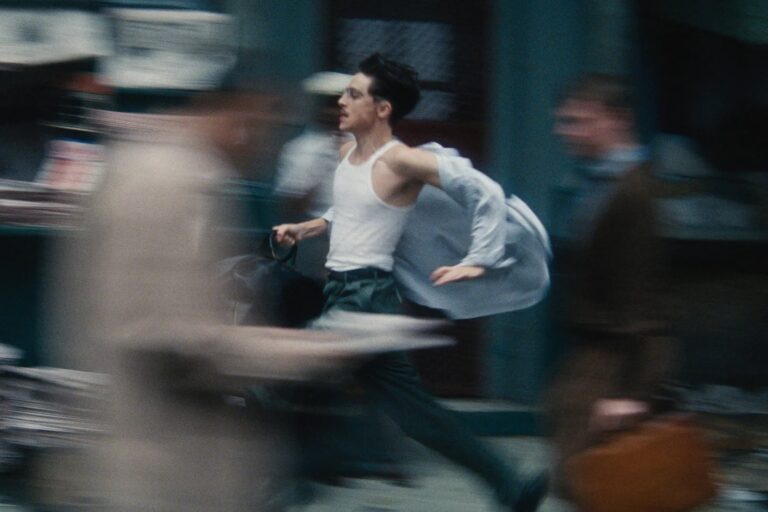
The entire situation started to drift away from their original plan which created an uncomfortable feeling in me. Peppiatt has a bag of visual tricks from his documentary work. The film includes lens changes and comic-book motion lines and on-screen text and fourth-wall breaks. The first act of the movie features these elements extensively before they disappear completely in the following sections. The movie lost its initial momentum because it seemed to exhaust its creative power. A romance subplot with a Protestant girlfriend starts as a joke about politics-as-kink and goes nowhere useful.
The story of Fassbender reaches its conclusion through a plot development which appears forced instead of being naturally derived from the narrative. The film presents a climactic concert which should create a victorious atmosphere yet it continues to explain its meaning after the performance because it doubts that the audience has grasped the story.
The musical composition creates an uncommon listening difficulty which affects all who listen to it. When Kneecap the band actually performs in Kneecap the film, it flattens into something generic. The music tracks use a club-oriented style which unites grime elements with music from an unidentified source. The anarchic energy suddenly buttons up. The musical performances in these films transform into music video content which follows its own visual rules that do not necessarily work for dramatic storytelling. The actors in the group demonstrate superior skills than their stage performances indicate. Smarmy, charismatic, genuinely funny. The organization requires leaders who will enable their staff members to perform their assigned duties independently.
The comparison between Trainspotting and this work seems both unavoidable and somewhat unjust to me. Peppiatt clearly admires Boyle's kinetic approach, but that film understood something about pacing that this one doesn't quite grasp. You can't run at full speed for 105 minutes. You can do this but you need to understand when to pretend you are losing your balance and when to allow complete silence to create its effect.
Throughout various centuries multiple governing bodies have worked to eliminate the language which people hold dear to their hearts. The film shows its political position through open and uncomplicated depictions. Kneecap the band walked out of SXSW over US Army sponsorship. They joined pro-Palestine protests at Sundance. The movie demonstrates how core principles attract viewers yet these principles create their own restrictions. The system requires its entire set of rules to function properly. The experience leaves you completely still while you wonder about your beliefs after the first wave of excitement fades away.