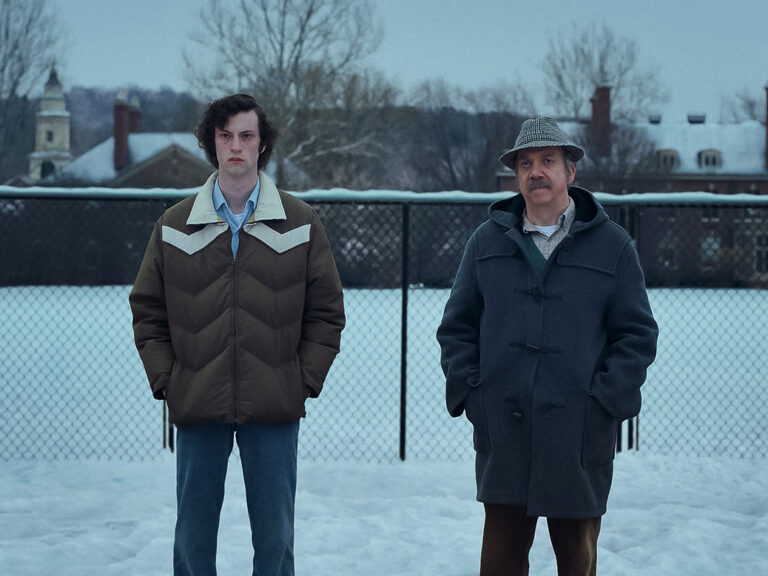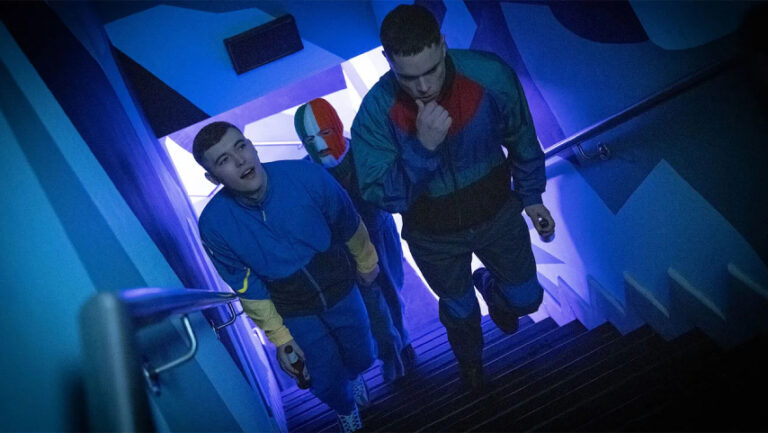
A return flight from New York to Tokyo in 1952 cost roughly $1,200. The inflation adjustment brings the total value to approximately $14,000 in current dollars. Marty Mauser cannot afford this. The funding control group opposes his candidacy because they have doubts about his ability to perform the job requirements.
Josh Safdie's Marty Supreme understands something fundamental about ambition in America: talent is only the deposit. People repay their debts through both physical harm and damaged relationships and their efforts to demonstrate their value to others.
Timothée Chalamet portrays Marty through his complete absorption of this business deal which makes him unable to recognize human beings except as targets or barriers to his path. The performance creates a powerful atmosphere which expresses deep longing. Literally vibrates. The camera fights to maintain his motionless position.
We meet Marty selling shoes on the Lower East Side, upselling an elderly woman into a more expensive pair with the easy charm of someone who has done this calculation a thousand times. The markup represents the amount which represents profit. The profit is freedom. The table tennis championship serves as his opportunity to gain recognition because he has earned his freedom. The circular pattern functions as the main design element which dominates this composition.
Safdie began his directorial work by making a film which used mechanical camera methods to show postwar Manhattan while forcing audiences to pay for it. The production design by Jack Fisk presents game rooms which have incorrect lighting and apartments that house excessive numbers of people in limited space and hotel lobbies which charge more than Marty earns in one month. Marty gains entry to the Ritz in London through his deceptive methods which create a new spatial arrangement. The area surrounding me grows into a space which allows me to breathe. Gwyneth Paltrow drifts through this space as Kay Stone, a fading movie star whose marriage to a stationary mogul has made her comfortable and bored. She and Marty explore space together while they both experience the feeling of having someone give them their undivided attention.
The Paltrow scenes have this strange quality. I kept thinking about how much her character must have paid to seem effortless, all those decades of maintenance, while Marty calculates the value of every interaction in real time. "The journalist hears him declare "I am the worst nightmare Hitler has ever faced" at the beginning of the story and this statement already demonstrates his economic strength. The survival abilities of Jews create a strategic benefit which sets their community apart from every other community. The Holocaust serves as historical context which enables the company to establish itself as a unique market entity.
Still. The film is careful not to let Marty off the hook. Odessa A'zion plays Rachel who is his childhood friend and carries his child while the script establishes she exists independently from his professional goals. She has her own skill to generate quick deceptions and she knows how their social system operates. The movie shows Marty using Luke Manley's innocent nature to get money but it does not present this as a typical underdog story. It frames it as what it is.
The beauty of everything around me became what disturbed me. The camera operated by Darius Khondji shows Marty during his work activities with a gentle positive attitude. There's a scene of Marty and Tyler the Creator's character Wally running alongside a car, pure joy on their faces, and it plays like a commercial for the unexamined life. The author seems to have performed this action with deliberate intention. Safdie presents the attraction to viewers before they can grasp the costs which come with it.
The film shows Géza Röhrig in a short appearance as Bela Kletzki who was an Auschwitz survivor and a table tennis champion. The film presents his scene as its most unusual segment which shows a death camp memory that exists between the boundaries of witness statements and hallucinatory visions. It's doing a lot of work. Perhaps too much. The connection between Marty's hunger and Jewish survival and regeneration and postwar geopolitical dynamics creates an uncomfortable contrast with the enjoyment of watching Chalamet survive yet another disaster through his dialogue.
The climactic match against Koto Kawaguchi (playing himself, essentially) tries to synthesise all of this into sporting catharsis. It nearly works. The ping pong sequences create genuine tension through their fast-paced filming style which Safdie used to direct the diamond district in Uncut Gems. The symbolic value of this image carries a heavy meaning. A Jewish player faces off against a Japanese player as both countries use their soccer skills to understand their World War II historical ties.
I walked out thinking about Marty's mother, played by Fran Drescher with exactly the right amount of exhausted patience. She has observed her son perform this action since the beginning of his childhood. She understands the final outcome of the story although the movie tries to show a different conclusion.