The heating costs at Barton Academy were calculated by someone who worked at the school during the Christmas holiday period. The school employed three staff members who included the groundskeeper and the cook and the teacher who received no student interest. The film by Alexander Payne shows boys being picked up by their parents who drive luxury vehicles while the camera focuses on the children who remain alone. The mathematical calculations present themselves in an obvious manner. Rich boys have places to go. The rest make do.
Paul Hunham teaches ancient history and has a wandering eye that students mock behind his back. He has worked at this school for decades without advancement, lives in faculty housing, owns nothing of particular value. The headmaster gives him Christmas supervision duty after he fails to pass the donor's son who cheated on his test. Paul Giamatti plays the role of a hunched and blinking character who has taken in numerous tiny degradations throughout his life. He quotes Seneca to teenagers who will inherit car dealerships and be fine regardless.
The remaining candidates decrease in number at a fast rate. A wealthy father swoops in and takes the other boys skiing, leaving Angus Tully, whose mother has chosen her new husband's Caribbean holiday over her son. Dominic Sessa gives Angus the particular brittleness of someone maintaining a performance. The student receives his education through a scholarship program yet he behaves with the same confidence as someone from an affluent background. He has achieved the correct body position. "No matter what I do, I always end up back in detention," he tells Hunham, and there is real exhaustion underneath the defiance.
The school cook Mary Lamb serves as the third character in the story. Da'Vine Joy Randolph demonstrates through her acting how grief has evolved into an enduring support system for this character. Her son attended Barton as a staff benefit, surrounded by boys who would go to college while he went to Vietnam. She feeds the wealthy and buries her own. The film demonstrates her anger through subtle suggestions instead of explicit scenes which turns out to be the best method. The scene remains unchanged because she observes these dining individuals through her gaze.
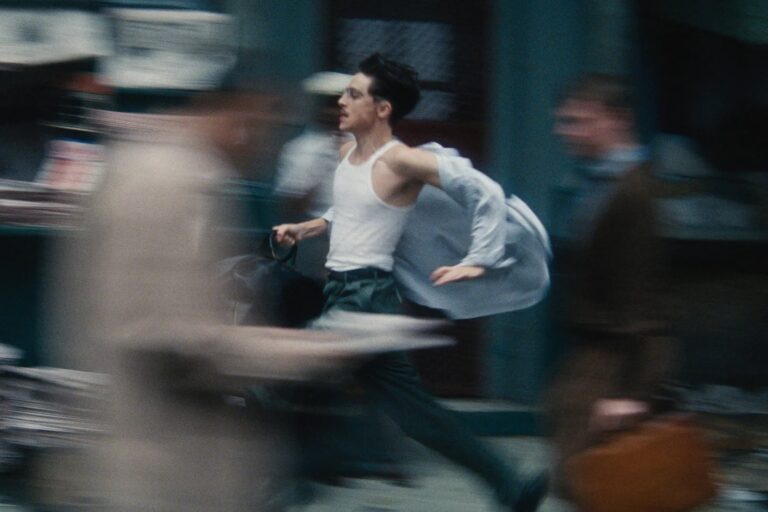
Payne shoots the whole thing to look like 1971. Yellowed colours, soft focus, the old Universal logo before the credits. Eigil Bryld used his cinematography to recreate the appearance of film stock which has become extinct. The movie presents artistic worth while showing a nostalgic setting which shows how white male redemption stories used to win awards without facing any major public opposition. The Holdovers knows what it is doing. The text shows difficulty in determining if it uses existing knowledge for its purposes or if it challenges that knowledge.
The three of them end up in Boston, eating at a restaurant Hunham cannot really afford, visiting a hospital Angus should not be near. Secrets emerge. The characters' past experiences become visible to me. "He wasn't even supposed to be there," Mary says of her son, and Randolph delivers it without reaching for anything. The line reaches its final position where it stops moving. The final section of the movie will show a character who gives up something to create a new debt system which the film requires you to experience as a powerful moment.
I did, mostly. My problem is smaller than that. Payne constructs the machinery so well you can hear it working. The beats continue to follow their pre-determined timing sequence. Gruff man softens. Angry boy opens up. Grieving woman finds a moment of peace. None of it is false exactly, but none of it surprises either. The work shows perfect mastery of its art form. The emotions are pre-approved.
The final transaction stands as the main thing which continues to affect me. A person incurs expenses to defend the entire integrity of someone else. The exchange rate is never questioned. The film presents it as generosity, and maybe it is, but I kept thinking about who has capital to spend and who has already spent everything. Payne knows the answer. He just finds it more comfortable to frame as grace.