Property envy becomes an ordinary aspect of life which people start to accept at a fast rate. I spent twenty minutes at a dinner party hearing someone explain their extension plans while I completely forgot that they acquired the house through a forced sale which resulted in the eviction of the previous owners. That's nothing, obviously. The system contains an important operational system which deserves attention.
Jonathan Glazer's The Zone of Interest takes that mechanism and places it against the wall of Auschwitz-Birkenau. Rudolf Höss, the camp commandant, has built his family a lovely home. Hedwig together with her wife refers to herself as the Queen of Auschwitz without showing any sign of surprise. She has a garden. Roses. The children swim in the river. There's a greenhouse. The soil shows exceptional fertility in its composition.
We never see over the wall. Glazer fails to display the camps in his presentation. The scene showed no selection process and no chambers and no dead bodies were present. The system produces audio output instead of displaying the visual content which users expected to see. The garden hears the neighbor's radio play at excessive volume through the sounds which travel across the garden. Gunshots that punctuate breakfast. A persistent industrial hum that turns out to be the crematorium. The children show no sign of fear. The camera also fails to capture anything.
The economic aspects of the situation continued to bother me. The Höss family operates through their stolen possessions. Hedwig puts on a fur coat while discovering lipstick inside the pocket without showing any signs of surprise. The barrow contains silk undershirts and tinned food products. The garden thrives because people have used their ashes to enhance the soil through earth burial practices. This is what economists call an externality problem, except the externality is genocide and nobody's pricing it in.
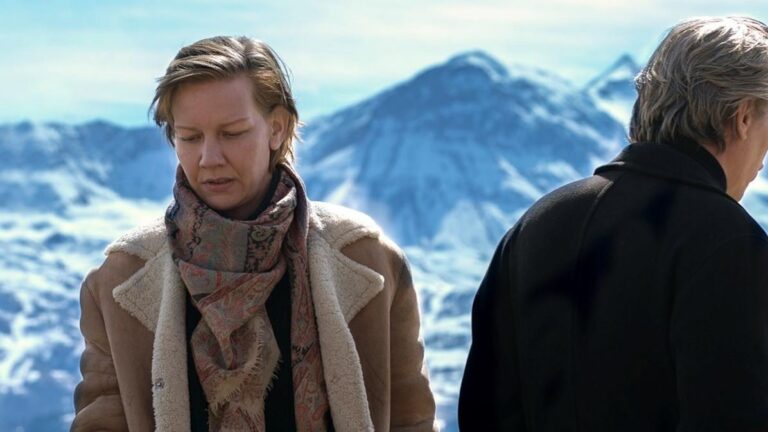
Sandra Hüller delivers her performance as Hedwig through a cheerful managerial style which made me struggle to observe her on screen. She stands as the host while she directs others and she spends time arranging the table settings for the napkins. At one point she threatens a maid with the crematorium: "I could have my husband spread your ashes across the fields of Babice."The message delivered in the same manner as an HR warning which addresses employee tardiness. Christian Friedel portrays Rudolf through his reserved administrative behavior in the film. The room contains men in suits who attend his meetings to discuss scheduling details and they celebrate their achievement of meeting their targets. Himmler establishes a mass deportation operation which he names after himself so he makes a phone call to his family as if he had received a job promotion.
The film was shot on stationary cameras mounted throughout the house, surveillance-style. Glazer used ten of them while he allowed the scenes to continue without any interference.
The effect creates a voyeuristic experience but it also produces a bureaucratic effect. The operational aspects of atrocity become visible through the organizational systems which maintain the continuous operation of a death factory.
There's a scene where the neighbours are over for coffee. Hedwig shows that her coat came from "Canada."One friend believes the song refers to the nation. The joke reaches its climax and the audience erupts into laughter. Canada was the prisoners' name for the storage warehouses where their belongings were sorted. The settlement founders chose this name because they believed the region possessed great wealth. Glazer fails to emphasize this point. He leaves it to stay in that position.
Resource allocation stayed as a persistent matter which I needed to think about. The Third Reich established an extensive system which served to kill people before it could redistribute their belongings. Coats, spectacles, gold teeth, hair. The Höss family are downstream beneficiaries of this supply chain, and they've completely normalised it.
The children engage in play activities with their trinkets. Hedwig's mother stops by to ask if the Jewish woman she used to clean for could possibly be living in that place. She leaves in the night without saying goodbye. Even she has a limit, apparently, though it takes the crematorium glowing red outside her window to find it.
Still. The movie does not present any major plot revelations. Everyone already knows. The knowledge they possess does not affect their regular activities.
Mica Levi's score deserves mention. Droning, queasy, it arrives at the edges and overwhelms the final minutes entirely. The thermal imaging sequence shows a nightmarish version of the same terrain which appears as a disturbing dreamscape. A girl hides apples for the prisoners. She discovers sheet music inside a tin which contains the survivor-composed song "Sunbeams". The domestic realistic environment experiences disruption because its interstitial elements which represent the zone itself create a memory effect.
The cinematography of Łukasz Żal creates a visually stunning yet critical visual experience.
The scene shows green gardens under sunlit conditions where kids are active in the area.
All of it underwritten by mass murder just off-frame. The production design team rebuilt the actual Höss house from photographs. They got the curtains right. They managed to get the birthday canoe exactly as it should be. People generally find the precise measurement to be something that creates a disgusting sensation.
Rudolf reaches the final section of his journey when he walks down a staircase before stopping in a dimly lit passageway. He retches. It's the closest he comes to a human response. Then he straightens his jacket and continues down. The movie shows modern-day Auschwitz museum where maintenance staff members move through areas containing many suitcases and shoes. The current situation shows a major difference because our current resources will only be used for maintenance operations. Curation. The continuous expense of remembering what another person decided to ignore.
I walked out of the cinema and the bus stop outside seemed very loud.