Fifty-six cents for a pack of cigarettes. Eighty-nine cents for a hot dog. Seven dollars and forty-three cents for two meals from a Chinese restaurant. The numbers he wrote in the film margins continue to haunt me because Ira Sachs turned that typical day into a powerful and heartbreaking movie of 2025.
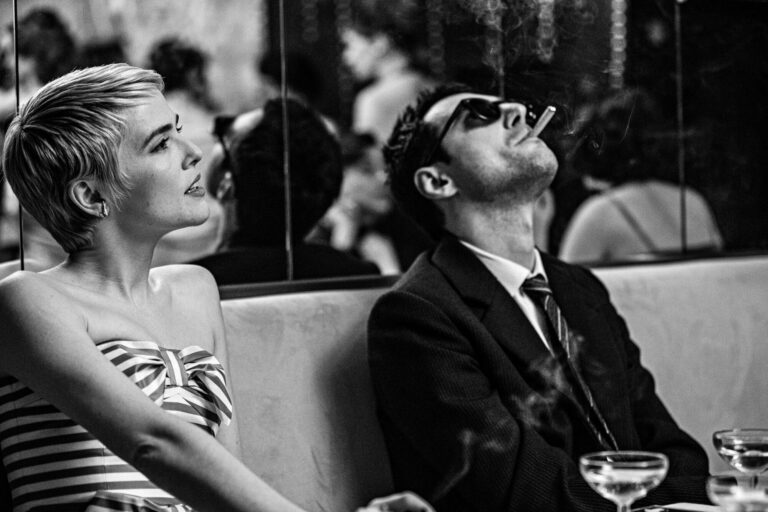
Here's what Peter Hujar's Day is, on paper: two people talking in an apartment for seventy-six minutes. The research investigates the complete expenses which artists must pay when they choose to live in a city which threatens to consume them completely. Ben Whishaw plays the photographer Peter Hujar, and Rebecca Hall plays his friend Linda Rosenkrantz, and together they reconstruct the events of December 18th, 1974. The process does not involve any form of reconstruction. Whishaw fully embodies Hujar to the point where any reference to "performance" seems like an inappropriate term.
The documentary project appears to be based on Rosenkrantz who documented her artist friends describing their daily activities for a book that failed to publish. Sachs used the rediscovered transcript to create a work which exceeds all possible expectations. A kind of economic confession booth. Hujar describes his work on the assignment to photograph Allen Ginsberg for The New York Times which marked his first official commission from the newspaper while his stories reveal his nervousness. The freelancer's permanent hum. "He sat down in the lotus position, looking very Buddha, right in the doorway, and started to chant," Hujar recalls. "And I really thought, 'Well, I can't interrupt God.'"He displays his professional doubt by showing respect instead of treating it as a professional challenge.
The movie presents a reality which I have not fully understood because it shows the unstable situation without any attempt to make it seem appealing. The East Village loft served as his home where he survived through his freelance work. The Ginsberg photo shoot turned out to be one of my professional assignments. The job he managed to get paid him very little. Liverwurst was cheap. Chinese food was cheap. The low cost of cigarettes made it possible for people to purchase them without perceiving it as a decision. The movie shows everything without any explanation as it shows how a person survives between their creative dreams and their need for financial stability.
The public should recognize Hall's outstanding performance as Rosenkrantz because it remains underappreciated. She functions as a listener but her act of listening requires physical work to accomplish. She gives him coffee while she guides him back to his main points and she lets out a loud sigh whenever he talks about prices. The person demonstrates a subtle form of heroism because they create the foundation which enables another person to express their creative abilities. The film shows how this situation exists. It might even be about this.
Sachs recorded his footage using 16mm film which produces an ethical texture through its grainy texture. People today face a modern urge to make all things perfect through digital cleaning yet I choose to reject this trend. The story shows how Rosenkrantz's apartment changes from morning sunlight to evening darkness to reveal that the entire day passed at a speed which followed his emotional journey instead of following clock hours.
I think I love this film. I'm not entirely sure yet. The exercise requires you to stay with everyday situations until they transform into something remarkable although this approach might not work for all people. Hujar records his uncompleted tasks at the conclusion of his workday which resembles my typical evening routine of unproductive time consumption. The movie fails to provide any solution to this emotional state. The smoke remains suspended in the air like it is floating in a space which lacks any airflow.
Hujar passed away from AIDS-related pneumonia which caused his death in 1987. The film never mentions this. It doesn't need to. The entire situation functions as a mourning song which honors a lost existence of living in the world that society now prevents. A time when you could drift through a day and simply have it be what it was.
The image of Ginsberg standing in the doorway while he chants has remained in my mind since that time. Hujar waiting. The moment before the photograph that never quite worked out the way he wanted.