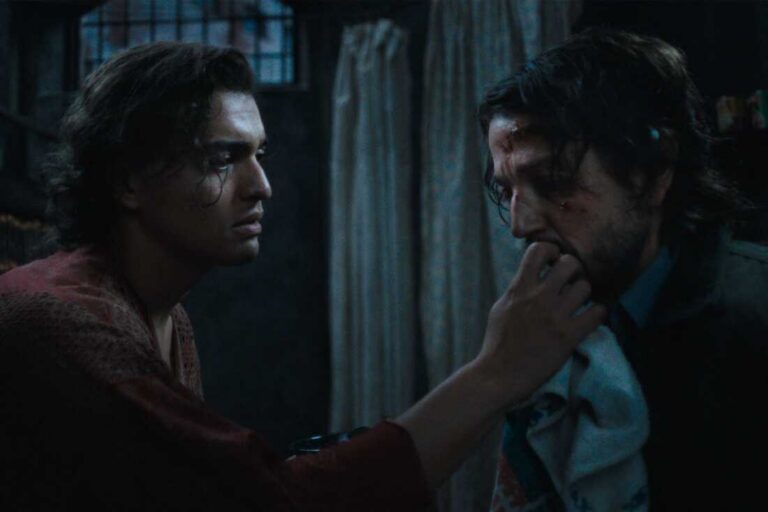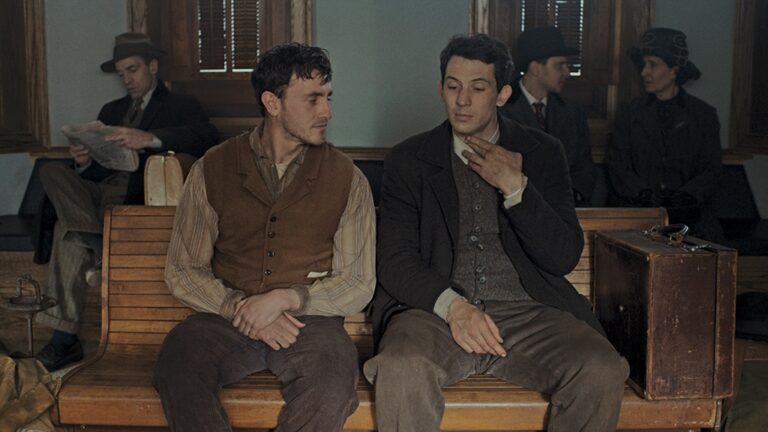
The first scene of Pillion shows Colin played by Harry Melling who delivers his performance with delicate intensity which makes viewers stay alert. The sofa belongs to the dog. Rosie, the dog, is beloved. Colin, the man, sleeps on the floor at the foot of the bed.
The sofa stays in my thoughts throughout every day.
It's not played for laughs, exactly, though the film is often very funny. It's played as fact. As arrangement. The structure shows two people who maintain a peaceful bond through their hierarchical relationship while the younger person discovers how to express his genuine emotions. The line reveals both a personal confession and an instant comprehension which reaches the audience. Colin isn't broken. He discovered an item which matched his search.
The most impactful element of Harry Lighton's first book emerges from his delicate treatment of leather objects and picnic tables and human pup masks. The movie demonstrates how it views human beings through its depiction of their bodies as if they were economic assets. Who rests. Who serves. Who gets to sprawl across furniture and who eats dinner standing against a wall. The parking attendant position of Colin demands him to stay noticeable while people should treat him as if he does not exist while he enforces rules which he did not create for people who dislike him because of his role. The system uses his body to fulfill its operational requirements. Ray provides a unique form of ownership which Colin learns from him. One he chose.
I'm not sure the film entirely interrogates this. Maybe it doesn't need to. I observed Colin perform his tasks which included beer delivery and cooking and beer service while he remained on his knees but I thought about all the work we do without pay for our loved ones and for being near to them and for the possibility of future recognition. The BDSM framework reveals all aspects of the transaction. Legible. The experience has given me a complete comprehension of the situation.
The character Ray played by Alexander Skarsgård exists as a person who fills areas like weather systems because he occupies every space without showing any interest in what others want to do. He's severe. He's sometimes cold. Lighton and Skarsgård prove through their research that harsh punishment methods do not necessarily result in cruel treatment of prisoners. Lesley Sharp delivers a quiet devastating performance as Colin's mother who reveals her concerns about consent and harm to Ray. Ray delivers a statement which creates more impact than I anticipated when he says "You should not determine what causes you discomfort because it might be harmful to your son."
That line. The line serves multiple purposes throughout the entire story.
The movie explores the painful experience of witnessing your beloved person select an existence which remains foreign to you. Colin's parents reject all forms of homophobic beliefs. They're not even disgusted by BDSM, not really. They're scared. Different expressions of fear appear in families based on how fear presents itself. It can look like concern. It can look like control.
The Gay Bikers Motorcycle Club serves as a family alternative because its actual members ride with the actors in the film. The film shows a camping weekend which alternates between people sharing stories by the fire and a more graphic scene while it shows how Lighton reveals the normal aspects of group bonding. People checking in on each other. People belonging somewhere. Colin dedicated his existence to being respectful and unobtrusive and compliant until he discovered a community which operated under its own distinct set of rules. Maybe clearer.
Melling is extraordinary here. I want to say that plainly. The performance stands out from his previous work because it presents submissiveness as an active choice which demands its own unique form of power. The boot-licking order creates both comedic and genuine moments when he says "Thank you" with complete conviction. The gratitude is real. The pleasure is real. Melling uses his story to depict Ray's increasing anger because Colin desires something he lacks while their relationship stays in a fragile state.
I don't know if Pillion has answers. I don't know if it's trying to. The system draws attention as its main feature. To textures. To silences. The time has come when someone chooses to remain or to depart.
The story concludes without finding any answers. The object remains with you because it represents a mystery which you asked yourself during the early hours of 2am but have not resolved since waking up.