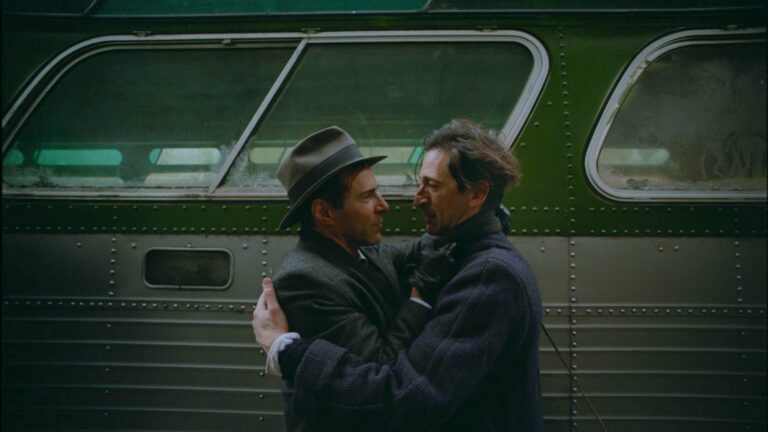
The first scene of Passages shows the Parisian apartment which Tomas and Martin share but my mind kept returning to the cost of their housing. The observation took place without being crude but it involved the same process which people use to calculate expenses when they observe others who present lives of apparent simplicity.
The knitwear alone. The market for such knitwear products remains inaccessible to most consumers because of its high price point. The film presents two fashionable characters who exist in a comfortable middle-class world which Ira Sachs deliberately displays to viewers. Through his depiction Sachs reveals how people use their comfort as protection and their refined tastes to exercise control.
Tomas (Franz Rogowski) is a German film director. Martin (Ben Whishaw) is an English printmaker. The two people have created a shared space in this urban area which neither of them owns but seems vital to them. At a wrap party for Tomas's latest film, Martin won't dance, and so Tomas finds Agathe (Adèle Exarchopoulos), a French schoolteacher, and she takes him home. The next morning, he bounds back to the apartment and says to his husband: "I had sex with a woman. Can I tell you about it?"People show their cruel behavior through performing regular activities which seem harmless to others. Almost.
The economy of attention which Tomas experiences fascinates me according to Sachs who intentionally explores this aspect. A director holds a professional position which requires him to maintain central focus in all his work. The film opens with him directing extras, fussing over the angle of a hip, and there's something almost comical about his intensity until you realise he brings this same grandiosity to his personal life. Everyone around him is an extra in his story. Tomas refuses to select between Martin and Agathe because selecting anything would force him to recognize boundaries which he refuses to accept. Rogowski gives him those big, vulnerable eyes, that impish curl to his smile, and you can almost, almost, understand why people keep letting him get away with it.
But wait. The way I have presented him makes him appear like a villain but this description does not accurately represent his nature. He's something worse, I think.
He's a naïf. He genuinely seems to believe that wanting things intensely enough should be enough to have them. The film demonstrates Tomas can execute dangerous actions because he possesses financial security. The apartment exists. The career exists.
People who have stable financial situations can afford to experience emotional turmoil as if it were a privileged experience. A hobby, even.
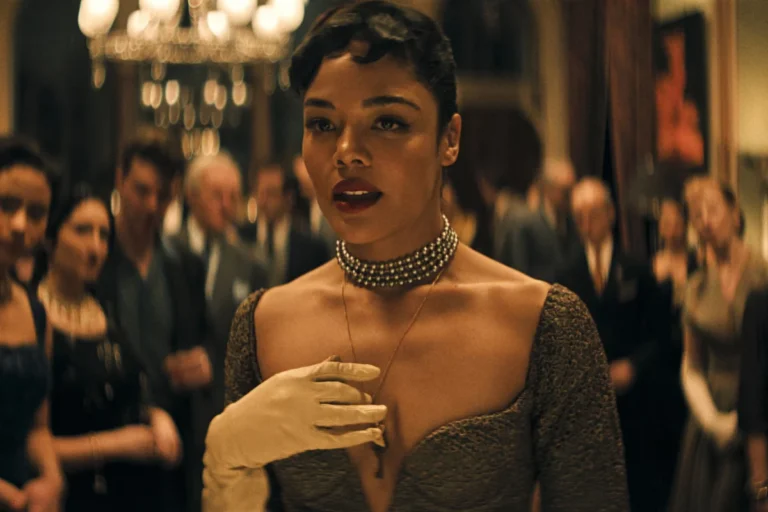
The film contains its most distressing element through Agathe. Exarchopoulos plays her with such acuity, such painful clarity about her own situation. Tomas declares his love but she answers by saying "You say it when it works for you."God, the devastation in that line. She knows exactly what she's buying into and she buys in anyway, and there's a whole dissertation to be written about why, about the pull of confident men who take up all the oxygen in a room, about how charisma is its own form of capital.
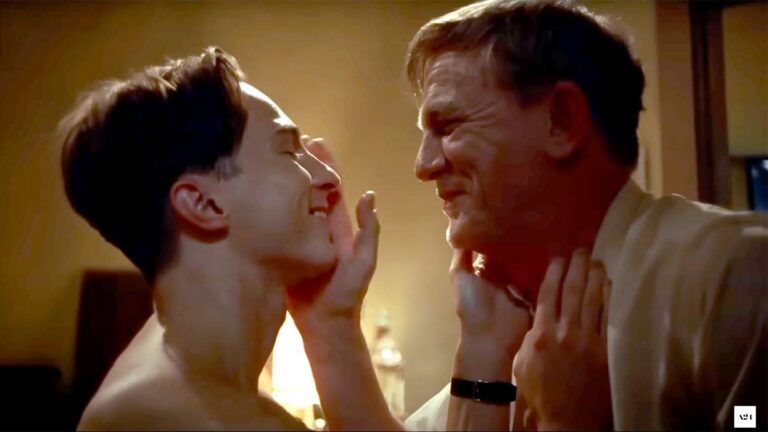
I kept noticing bodies in this film. Who rests. Who's always in motion. Tomas keeps moving as he asks for things because his loose-fitting crop tops display his casual way of taking charge. Martin transforms into furniture while he remains motionless because his immobility serves as a protective measure which Whishaw uses to create a powerful and heartbreaking effect. The sexual encounter between them occurs without any spoken words yet it reveals more about their relationship than any conversation would.
Whishaw stands out as being exceptional in this particular situation. The bursts of fury, the wounded retreats, the way he holds himself when he's trying not to fall apart.
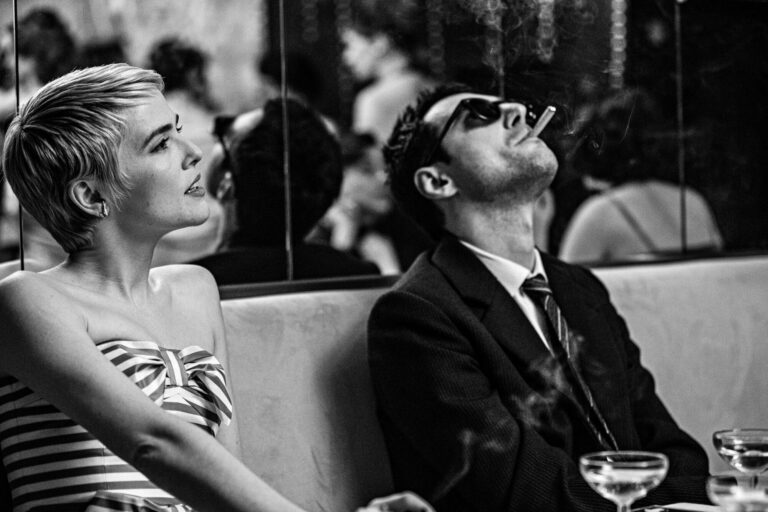
Josée Deshaies's cinematography borders on austere. The city of Paris presents itself through its cold yet beautiful appearance which showcases its muted color palette and its structured architectural design. The sex scenes, which have been publicised to the point of distraction, are passionate but deliberately not intimate. Sachs shows exact detail about which characters the camera focuses on while he explains how this reveals about power dynamics and attractiveness and human conduct during intimate activities.
His eyes maintain a medical quality which serves the movie although it creates a sense of distance between him and the audience.
The ending doesn't resolve anything, really. A cyclist rides through the city streets as night approaches while his feeling of being alone becomes more intense. No fixed destination. I appreciated that, the refusal to tie things up neatly. Tomas will probably keep doing what he does. Martin and Agathe will carry the damage forward into whatever comes next. The operational design of systems prevents them from transforming because it leads to suffering for their users. The bourgeois life absorbs the shock and continues.
I left the building to study the functioning mechanism of doors. The story contains numerous threshold scenes which show characters standing between different spaces while they face their choices and their multiple personal identities. Maybe that's all any of us are, really. Liminal. We remain in a state of anticipation because we need some form of motivation to decide which direction to take.
The knitwear really is extraordinary, though.